 French wallpaper murals & Decorative panels

 French wallpaper murals & Decorative panels
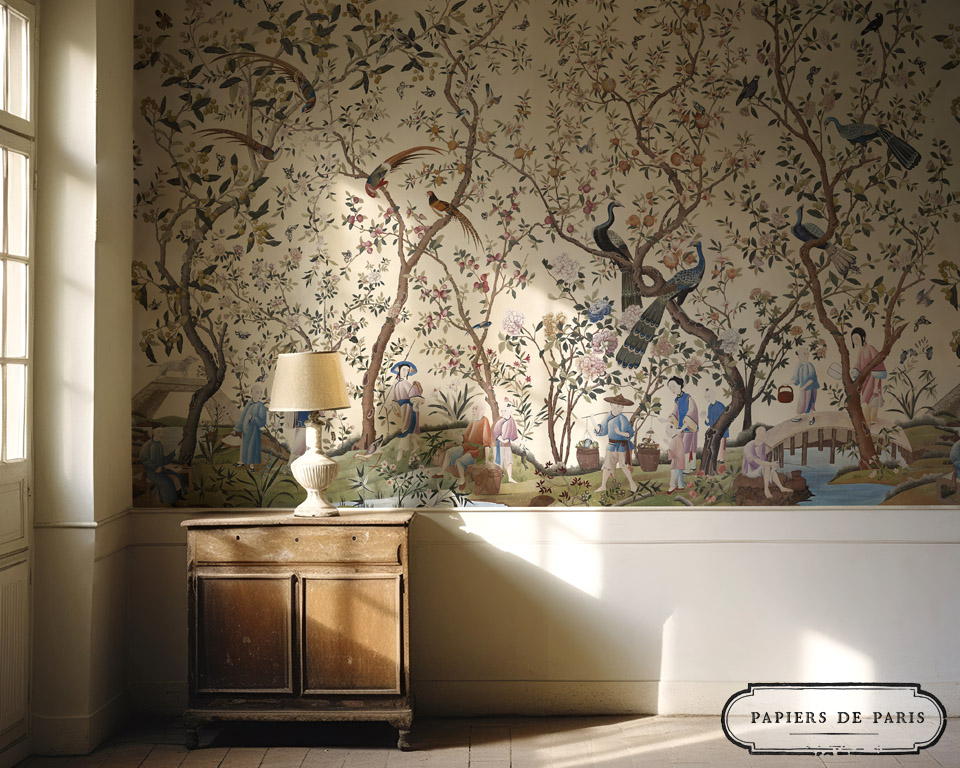
| In many ways the precursor of panoramic wallpaper, so-called Chinoiserie paper is a style in its own right, which cannot simply be assimilated to the large family of Asian-style decor, to which it is of course a part. See also:Asian decor Discover our selection of products below |
Chinoiserie in grisaille - Jade green - Wallpaper
| $ 244,38 excl. VAT |
Chinoiserie in grisaille - China red - Wallpaper
| $ 244,38 excl. VAT |
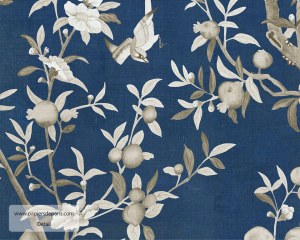
Chinoiserie in grisaille - China Blue - Wallpaper
| $ 244,38 excl. VAT |
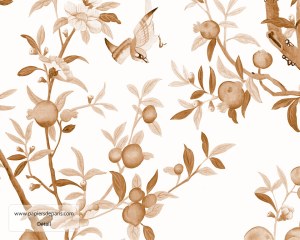
Chinoiserie in grisaille - Terracotta - Wallpaper
| $ 244,38 excl. VAT |
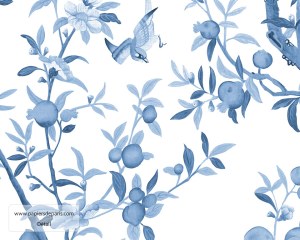
Chinoiserie in grisaille - Blue and white - Wallpaper
| $ 244,38 excl. VAT |
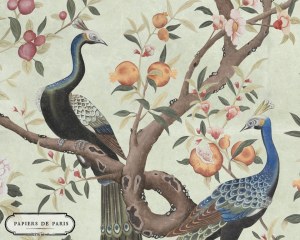
Chinoiserie 18eme - Green water - Wallpaper
| $ 244,38 excl. VAT |
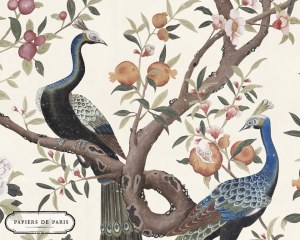
Chinoiserie 18eme - Cream - Wallpaper
| $ 244,38 excl. VAT |
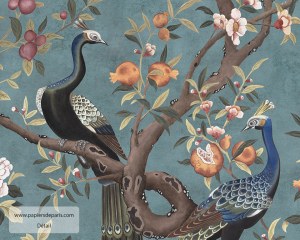
Chinoiserie 18th - Blue - Wallpaper
| $ 244,38 excl. VAT |
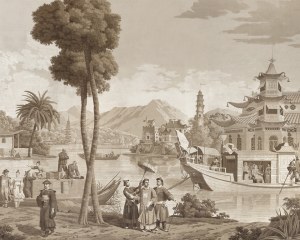
Chinese Procession - 1811
| $ 253,95 excl. VAT |
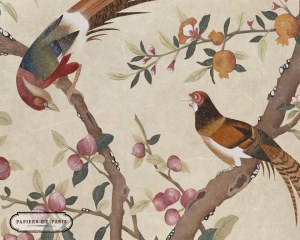
Chinoiserie 18th - Wallpaper
| $ 244,38 excl. VAT |
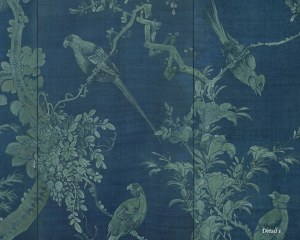
Korean Panel - Scenic Wallpaper
| $ 305,70 excl. VAT |
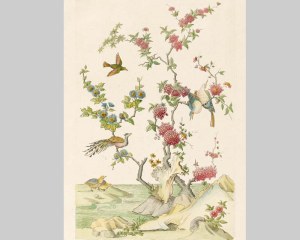
Chinese Birds - Wallpaper mural
| $ 238,63 excl. VAT |
History of chinoiserie decor Europe in the 17th century was bathed in tales and fabulous stories of voyages pioneered by
Marco Polo and his tales published in the 15th century . In the 17th century, Johan Nieuhoff's
travel diaries were another source of wonder. The travelers' tales, which made China a
exoticand marvelous country in the eyes of Europeans, aroused a strong curiosity and demand
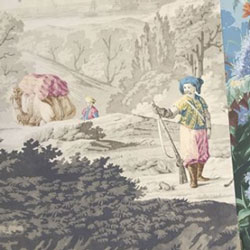
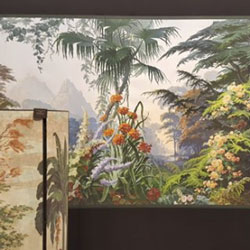
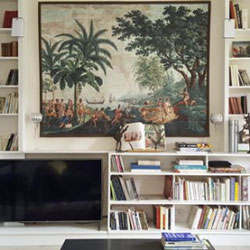
for the Arts of Asia Chinoiseries: Chinese or European?Highly appreciated in London, where demand was pouring in to accompany laquered objects and furniture from China, wallpapers in Chinoiseries quickly became a big hit in Paris. Wallpaper manufacturers were interested in producing large decors for a bourgeois clientele, who were very demanding when it came to pictorial quality. They successfully distributed these decors. However, during the XVIIIth century or more precisely from 1760 onwards, the production of chinoiserie papers began to decline. In England, original Chinoiserie papers lost popularity, and the English brought in Chinese artists to paint decors more in line with their customers' expectations and tastes. Similarly, French taste for exotic decor would take a particular turn, led by artists such as Watteau (1710 decor at the Chateau de la Muette), Boucher and his multiple engravings of Chinese scenes retranscribed in a French rococco style, , Huet or Fragonard. Their landscapes are adorned with Chinese or pseudo-Chinese attributes, inventing Chinese gardens that are just as close to the English imaginary. Jean Pillement and his cahiers de Chinoiseries would make this a specialty, inventing a chinoiserie style in its own right... From a technical standpoint, 18th-century Frenchmen, notably Martin, developed varnishes imitating lacquer, which had become a symbol of wealth since furniture imports from China. When chinoiseries panoramiques with landscapes appeared, they found an immense echo and were an undeniable source of inspiration for the first panoramic wallpaper craftsmen in France, including Jospeh Dufour, who was the precursor. chinoiserie motifs and themesCategorized asantic wallpaperchinoiserie wallpapers are an idealized evocation of nature and life in China, and so the motifs and themes favored by Europe will soon be found in these decors. Exoticism is one of the major characteristics, with its lush, vegetal aspect. Birds are colorful and seem to respond to each other as in a Garden of Eden, where nature is in osmosis. The characters and Chinese society are also painted in their traditional garb, whether luxurious or laborious. Scenes relating to the manufacture of porcelain or the making of Teas are frequent, themes dear to the hearts of Europeans, who discover with infatuation the Chinese taste with these imported objects and products. Among the most emblematic Chinese motifs is of course the Pagoda, which would quickly become a symbol of China, such as the Nanquin pagoda with a porcelain roof. Other motifs appearing very frequently in chinoiserie-style decors include: pavilions, umbrellas, Chinese hats, traditional Chinese houses, bridges and exotic trees In which room should a Chinoiserie décor be placed?Chinoiseries are decorations with a strong Asian and graphic style. Installing a chinoiserie wallpaper in your home must therefore be thought through to ensure that this ornamental element finds its place in a suitable environment. Here are a few tips for installing this type of wallpaper Chinoiserie in a dining roomThe dining room is a festive room that it's common to decorate in a special way. A Chinoiserie wallpaper will fit right in, and many homeowners past and present have made this choice for a pleasant and refined reception area. A Chinoiserie in a bedroomThe bedroom is a room in which we like to feel like we're in a cocoon. What could be more appropriate than chinoiserie decor with its branches, birds and garden of Eden atmosphere? On a wall at the head of the bed or all around the room, it will be an asset to add a unique touch to a bedroom. In a hallwayA room of passage by definition, the hallway will be able to be magnified by a chinoiserie decor. Often composed of an ornament, in particular a soubassement, wallpaper can be placed on top, unfolding a story that characters and birds will tell with each passage. For more inspiration, here's an article featuring our decors. Our wallpaper as wall decoration In which type of decor to place a Chinoiserie décor?Fans of "Mix and Match" or "All-Over", i.e. a mix of styles or a stylish decoration,same as antic&neoclassic wallpaper, Chinoiserie will be able to adapt to both approaches. recreating Asian-style decorIt can be extremely interesting to recompose a decoration close to that which was common in wealthy circles in the 18th century by adopting CHinoiserie decor for an entire room. Bringing quality Chinese furniture and objects together with our 18th-century Chinoiserie wallpaper is certainly a way of reviving the splendor of that era. Particularly interesting in a building from the 17th and 18th centuries, this can also be an appropriate decoration for a more recent, even modern home. In a more modern decorOur living spaces today are very often recent constructions, in which interior ornamentation has often taken a back seat. As a result, installing a decor as classical as chinoiserie may seem an anachronism or an overly ostentatious approach. But today's tastes are undeniably moving towards a return of the beautiful, allowing for reminders, quotations, comparisons or simply juxtapositions of very different styles, from which we like to pick and choose. A way to create a unique, personal and modern space. Pleasing yourself is the rule, while taking care to match colors or make them interact. How to hang chinoiserie wallpaper?Our wallpapers are non woven decors and are therefore installed like most commercial papers by gluing to the wall. Each strip is numbered and laid edge-to-edge with no overlap. Our papers are of course accompanied by installation plans and instructions. |
About the Author
Jean-Baptiste Denis 
Trained as an engineer and draughtsman, he is passionate about art history and
ornamentation in architecture and decoration.
|
     |
|||||
|
|
|||||
|
|||||
| ©2023 - Papiers de Paris |


